
How to Make a Protein Drink for Muscle Gain
Last Updated: November 8, 2026
Quick Summary
A protein drink for muscle gain works best as a supplement to a solid diet and a real training program, not as a shortcut. Build it from a liquid base, 20-25 g of protein, a carb source, and flavor, and drink it when it helps you close your daily protein gap.
- Protein supplementation alone, without resistance exercise, appeared ineffective for muscle mass and strength in healthy older adults.
- Timing matters less than total daily intake, so drink a shake within a couple of hours of training or whenever it closes a gap.
- A worked example with 12 oz almond milk, whey isolate, oats, banana, and peanut butter delivers about 40 g protein and 480 calories.
- The biggest mistake is treating a shake as a meal replacement, which can leave you short on calories and nutrients.
- For beginners, choose a powder you can digest comfortably and afford to use daily, aiming for 20-25 g protein per serving.
Table of Contents
- What a Protein Drink Can and Can't Do for Muscle Gain
- When to Drink Protein Shakes for Muscle Gain
- The Best Protein Shake for Muscle Gain Homemade: A Step-by-Step Build
- Best Protein Powder for Muscle Gain for Beginners
- Making a Protein Drink for Muscle Gain at Home: Three Recipes With Numbers
- Common Mistakes That Stall Muscle Growth
- Build Your First Bloat-Free Shake With Chocho Protein
- Frequently Asked Questions
What a Protein Drink Can and Can't Do for Muscle Gain
A protein drink for muscle gain works best as a supplement to a solid diet and a real training program, not as a shortcut.
The U.S. market sold 1,251 million bottles of protein shakes in 2024, with forecasts reaching 3,389 million bottles by 2033, according to Mark & Spark Solutions' U.S. protein shake market analysis. Sales volume does not equal results, though. What you put in the cup and how you train matter far more than the label on it.
What the research actually shows
A 2022 systematic review and meta-analysis indexed by PubMed Central found that raising daily protein intake produced small additional gains in lean body mass and lower-body strength in healthy adults. Small is the operative word. A 2015 review indexed by PubMed reached a similar conclusion: protein supplementation may help muscle mass and performance when the training stimulus is adequate.
That last clause carries the weight. A 2021 study in the American Journal of Clinical Nutrition found that protein supplementation alone, without resistance exercise, appeared ineffective for improving muscle mass and strength in healthy older adults. Skip the strength training and the shake does little.
How much protein you need per day
Protein needs vary by individual, so check with a qualified professional about your personal target. Shakes can make it easier to fit protein into a busy day.
If recovery is your sticking point, our guide on how much protein for muscle recovery breaks down daily targets by training load.
When to Drink Protein Shakes for Muscle Gain
Timing matters less than total daily intake. A shake within a couple of hours of training is convenient, but hitting your daily protein target consistently drives muscle growth more than any specific window.
A practical rule: drink it when it helps you close the gap. If you struggle to eat enough protein at breakfast, blend one then. If you train fasted and feel wrecked afterward, drink it post-workout. The best time is the one you will actually repeat.
| Situation | Best timing | Why it works |
|---|---|---|
| Hard resistance training | Within 1-2 hours after | Convenient protein hit during recovery |
| Low-protein breakfast habit | Morning | Closes an early daily gap |
| Evening training | Before bed | Supports overnight recovery |
| Busy workday | Any consistent slot | Builds a repeatable habit |
The Best Protein Shake for Muscle Gain Homemade: A Step-by-Step Build
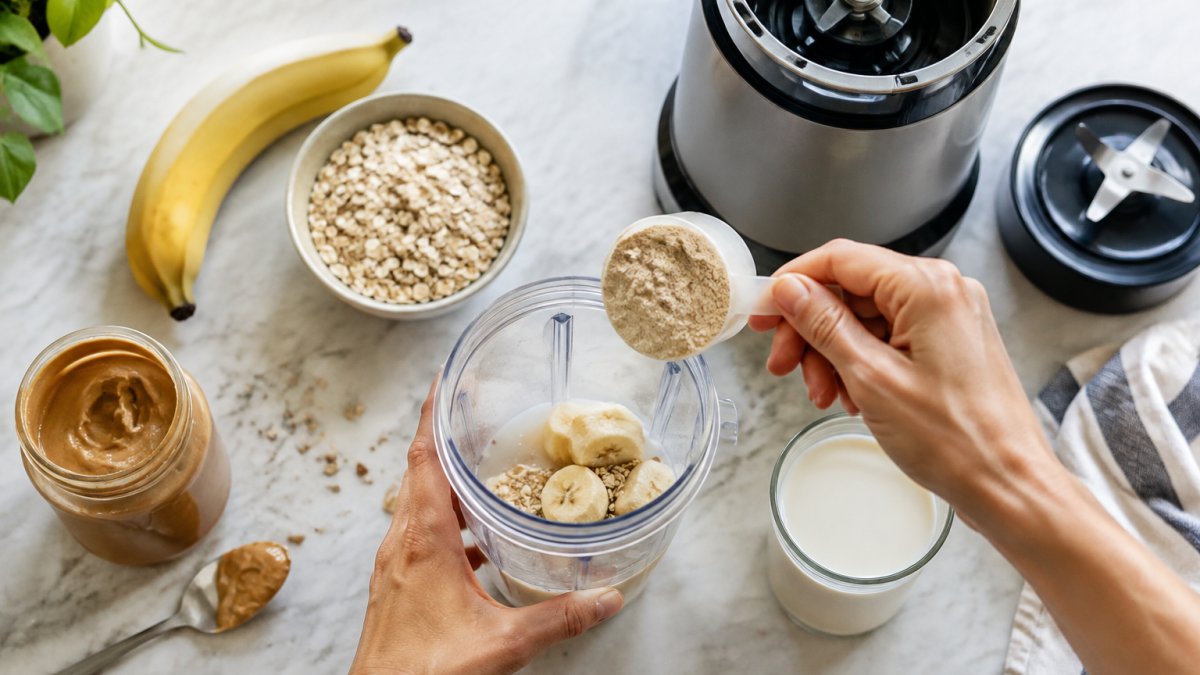
The best protein shake for muscle gain homemade starts with four parts: a liquid base, a protein source, a carb source, and flavor.
Step 1: Choose the base (8-12 oz)
- Dairy milk: 8 oz adds about 8 g protein and 120 calories.
- Almond milk, unsweetened: 8 oz adds about 1 g protein and 30 calories.
- Water: 0 g protein, 0 calories, thinnest texture.
Use less liquid for a thick shake you can eat with a spoon, more for a drinkable one.
Step 2: Add the protein (20-25 g)
- Whey isolate: about 25 g protein and 110 calories per scoop; fast-digesting and complete.
- Casein: about 24 g protein and 120 calories per scoop; thicker and slower-digesting.
- Plant blend (pea and rice): about 20-25 g protein and 120-140 calories per scoop; check that the label lists all nine essential amino acids.
Step 3: Add carbs for calories and texture (100-300 calories)
- 1/2 cup rolled oats: about 150 calories, 5 g protein, 27 g carbs.
- 1 medium banana: about 105 calories, 27 g carbs.
- 1 tbsp honey: about 64 calories, 17 g carbs.
For a leaner shake, use one carb source. For a mass-gain shake, use two.
Step 4: Add flavor and optional fat
- 1 tbsp cocoa powder: about 12 calories, 1 g protein.
- 1 tsp cinnamon or 1/2 tsp vanilla extract: negligible calories.
- 1 tbsp peanut butter: about 95 calories, 4 g protein, 8 g fat.
Step 5: Blend in the right order
Pour the liquid in first, then add the powder, then the carbs and flavor. Blend on low for 10 seconds, then high for 30 to 45 seconds. This order keeps powders from clumping and stops dry pockets from forming under the blades.
A worked example with numbers
12 oz unsweetened almond milk, 1 scoop whey isolate, 1/2 cup oats, 1 banana, 1 tbsp peanut butter, 1 tsp cocoa powder. Total: about 40 g protein and 480 calories. That covers roughly a quarter of a 180-pound lifter's daily protein target and about 15 percent of a muscle-gain calorie target.
Substitutions for allergies and sensitive stomachs
- Dairy-free: swap dairy milk for almond, oat, or soy milk and use a plant protein blend.
- Lactose-free: lactose-free milk plus whey isolate works for most people who react to lactose rather than milk protein.
- Soy-free: choose pea, rice, or chocho protein instead of soy.
- Nut-free: replace peanut butter with sunflower seed butter or skip the fat.
- Low-FODMAP: use rice protein and avoid honey and high-lactose dairy.
Whey protein isolate suits most people who tolerate dairy. Casein, including calcium caseinate, digests more slowly. Plant-based protein covers dairy-free and soy-free needs. If you react to soy or dairy, our soy free dairy free protein powder buyer's guide walks through label checks, and our roundup of the best protein for sensitive stomachs narrows the field.
Watch out: homemade shakes are only as good as the powder you use, so check the label for a clear protein-per-serving number before you build a daily habit around one tub.
Best Protein Powder for Muscle Gain for Beginners
For beginners, the best protein powder for muscle gain is one you can digest comfortably and afford to use daily. A powder only builds muscle if you actually drink it.
Whey, casein, and plant-based options compared
- Whey protein and whey protein isolate: Fast-digesting, complete essential amino acids, low cost per serving
- Milk protein and casein: Slower release, useful before bed
- Plant-based protein: Soy, pea, and chocho options; quality varies by blend
Quality checks before you buy
- Protein per serving listed clearly (aim for 20-25g)
- Full ingredient list, no proprietary blends
- Third-party testing or contaminant screening
- No gums or fillers if your stomach is sensitive
- Serving size and cost per gram of protein
Making a Protein Drink for Muscle Gain at Home: Three Recipes With Numbers
Making a protein drink for muscle gain at home takes about five minutes and costs far less than ready-to-drink shakes. Each recipe below lists protein and approximate calories so you can fit it into your daily target.
1. Classic Post-Workout Shake 12 oz almond milk, 1 scoop whey isolate, 1 banana, 1/2 cup oats. About 35g protein, 350 calories.
2. Slow-Release Night Shake 10 oz milk, 1 scoop casein, 1 tbsp peanut butter, cinnamon. About 30g protein, 320 calories.
3. Plant-Based Recovery Shake 12 oz almond milk, 1 scoop chocho protein, 1/2 cup oats, 1 tbsp peanut butter. About 30g protein, 340 calories.
Common Mistakes That Stall Muscle Growth
The biggest mistake is treating a shake as a meal replacement. Muscle building needs adequate food intake overall, and a shake that replaces real meals can leave you short on calories and nutrients.
Three more that show up constantly:
- Drinking shakes but skipping resistance training, the actual growth stimulus
- Ignoring total daily protein and relying on one shake
- Choosing a powder that causes bloating, then abandoning protein altogether
If plant protein leaves you bloated, our guide on why plant protein causes bloating explains the likely culprits and how to avoid them.
Build Your First Bloat-Free Shake With Chocho Protein
Many people with sensitive stomachs look for protein powders without extra ingredients like gums, fillers, soy, or dairy. Chocho, an ancient Andean lupin also called tarwi, offers a complete plant protein with all nine essential amino acids and none of that baggage.
Our Pure Tarwi Protein delivers 25g of plant protein per serving from a single ingredient, with no gums or fillers, and blends into a neutral-tasting shake. For a flavored option, Cacao Tarwi Protein brings 20g of protein and seven simple ingredients.

If bloating has derailed your protein routine before, you are not stuck. Seed Foods makes chocho-based protein designed for sensitive stomachs, with complete plant protein, one-ingredient simplicity, and no soy, dairy, gums, or fillers. Get started with Seed Foods and build a shake your stomach can actually handle.
Frequently Asked Questions
How much protein should a drink contain to support muscle gain?
Most people do well with 20 to 30 grams of protein per drink, which fits comfortably into a daily target of roughly 1.4 to 2.0 grams per kilogram of body weight. Research generally suggests that higher daily protein intake can support small additional gains in strength and lean mass when combined with training. The per-drink number matters less than the daily total, so spread servings across meals and training days rather than loading everything into one shake.
Can a plant-based protein drink support muscle growth?
Yes, if it supplies all nine essential amino acids. Chocho, also called tarwi or Andean lupin, is a complete plant protein, and Seed Foods' Pure Tarwi Protein delivers 25 grams per serving from a single ingredient. Protein supplementation may support muscle mass and performance when the training stimulus is adequate. Pair the drink with resistance training and enough total calories.
When should you drink a protein shake for muscle gain?
Timing is secondary to your daily total. A shake within a couple of hours of training is convenient, and a serving between meals helps you hit your protein target on busy days. What matters most is that resistance training provides the stimulus: protein supplementation alone, without exercise, is generally not enough to build muscle and strength. Drink it when it helps you stay consistent.
What ingredients should you avoid in a protein drink?
Watch for added sugars, gums, fillers, and long ingredient lists if you have a sensitive stomach. Short ingredient lists are worth checking when comparing protein powders. Seed Foods keeps it simple: Pure Tarwi Protein lists one ingredient, tarwi, with no gums, fillers, soy, or dairy, which suits people who bloat on conventional powders.

9 Natural Energy Boosters for Pre-Workout Fuel
Plant Protein Powder Benefits: A Complete Guide
Related Posts

Plant Protein Powder vs Whey: Which Fits Your Body

How to Work Ancestral Superfoods Into Your Daily Meals

Chocho Protein Amino Acid Profile: What the Numbers Show

7 Ways to Get Enough Protein on a Vegan Diet

Best Vegan Protein Powder for Smoothies in 2026

Benefits of Ancestral Gut Support Supplements: What Evidence Shows

Are Ancestral Probiotic Superfoods Good for Gut Health?


