

Complete Amino Acids in Plant Foods: A 2026 Guide
Table of Contents
- What Is a Complete Protein and Why It Matters
- The Nine Essential Amino Acids Your Body Needs
- Plant Foods With All Nine Essential Amino Acids
- Plant Protein Combining: Building Complete Proteins From Incomplete Sources
- Beans and Rice as a Complete Protein
- Plant Protein for Sensitive Stomach: Digestibility and Bioavailability
- Protein Quality Scoring and How Much You Actually Need
- Practical Meal Plans: How to Get All Nine Amino Acids Daily
- Frequently Asked Questions
Last Updated: October 9, 2026
What Is a Complete Protein and Why It Matters
A complete protein is a food containing all nine essential amino acids your body cannot produce on its own. These amino acids are the building blocks your cells use to repair tissue, build muscle, create enzymes, and produce hormones.
For decades, conventional wisdom held that complete proteins came exclusively from animal sources and that plant-based eaters needed to combine foods at every meal. That advice was overstated.
The real issue isn't whether plant proteins can be complete, but which ones are and how much to eat.
The Nine Essential Amino Acids Your Body Needs
Your body requires nine amino acids it cannot synthesize: leucine, isoleucine, valine, histidine, lysine, methionine, phenylalanine, threonine, and tryptophan.
Each plays a specific role. Leucine, isoleucine, and valine (the branched-chain amino acids) trigger muscle protein synthesis after exercise. Lysine supports bone health and immune function. Methionine provides sulfur for connective tissue and detoxification. Tryptophan is a serotonin precursor affecting mood and sleep. Histidine regulates immune response.
The challenge with many plant proteins isn't that they lack these amino acids, but that they're often low in one or two, creating a "limiting amino acid" that reduces overall usability. Combining plant protein sources across your day creates a complete amino acid profile, even if no single food has all nine in optimal ratios.
The practical takeaway: focus on plant foods with all nine essential amino acids, or deliberately pair complementary sources. Both strategies work.
Plant Foods With All Nine Essential Amino Acids
Several plant-based foods deliver complete amino acid profiles with all nine essentials in meaningful amounts. These are your anchor proteins.
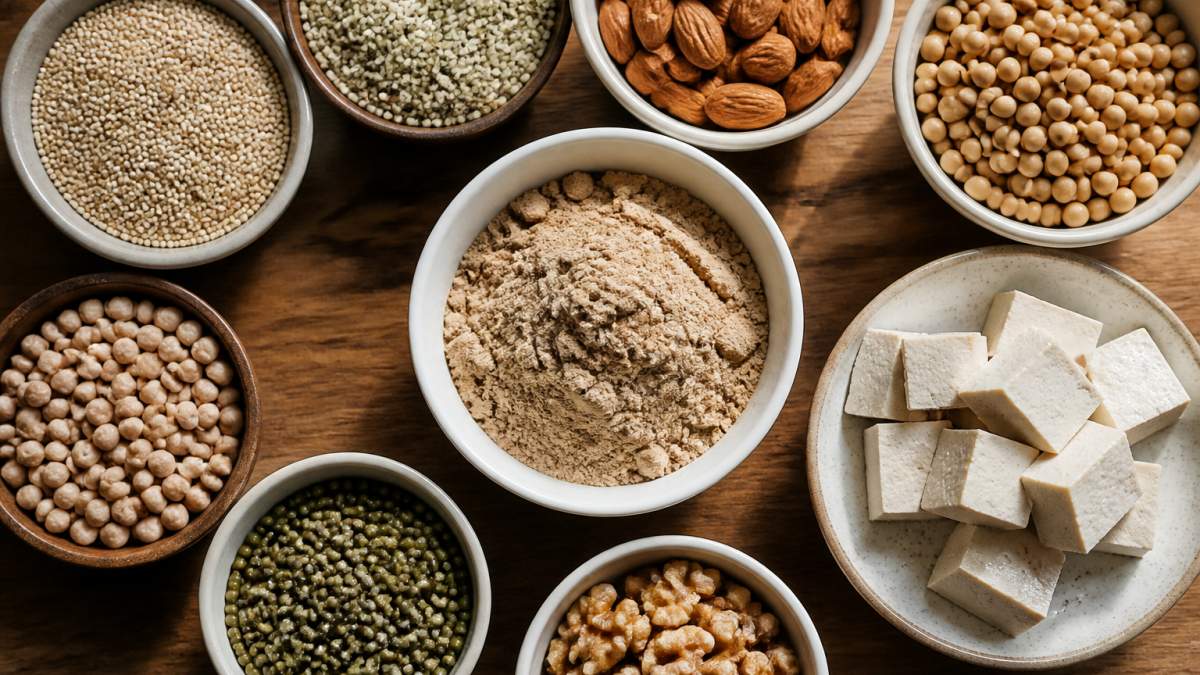
Chocho: An Ancient Complete Plant Protein
Chocho, also called tarwi or Andean lupin, is a legume cultivated in the Peruvian highlands for thousands of years. It contains all nine essential amino acids, with a particularly strong profile: high in lysine (often the limiting amino acid in grains), leucine, and methionine.
A single serving delivers approximately 25 grams of plant protein with complete amino acid coverage. Unlike many plant proteins, chocho is naturally alkaline and anti-inflammatory, making it easier on sensitive digestive systems.
At Seed Foods, we've built our product line around chocho because it solves a real problem: plant-based athletes and people with digestive sensitivities need protein that doesn't cause bloating or inflammation. Our Pure Tarwi Protein contains one ingredient, chocho, delivering all nine essential amino acids without fillers, gums, or soy.

:::pro-tip Chocho has a slightly earthy, mild flavor. Start with a small amount in smoothies or blend it into oatmeal. Most people find it disappears into the background, making it ideal for people who dislike the chalky or artificial taste of conventional plant protein powders.
Soy Foods: Tofu, Tempeh, and Edamame
Soy is one of the few plant proteins with a complete amino acid profile comparable to animal sources. Tofu, tempeh, and edamame all contain all nine essential amino acids.
Tofu (pressed soy curds) is neutral-flavored and absorbs marinades well; a 3.5-ounce serving of firm tofu provides roughly 15 grams of protein with complete amino acid coverage.
The limitation for many people: soy triggers digestive distress, bloating, or inflammation. If you tolerate soy well, it's an economical, convenient complete protein source. If you don't, chocho or the sources below offer equally complete alternatives.
Quinoa and Other Pseudocereals
Quinoa is a seed classified as a pseudocereal (not a true grain). Unlike wheat, rice, or oats, it contains all nine essential amino acids, making it a rare complete plant protein from the grain family.
A cooked cup of quinoa provides roughly 8 grams of protein with complete amino acid coverage, plus fiber and magnesium. Buckwheat is another pseudocereal with all nine essentials, though slightly lower in protein density.
The practical use: quinoa and buckwheat work best as part of a mixed meal rather than as your sole protein source.
Hemp Seeds and Chia Seeds
Hemp seeds contain all nine essential amino acids, with a strong ratio of branched-chain amino acids (leucine, isoleucine, valine), the ones most directly involved in muscle protein synthesis.
A 3-tablespoon serving of hemp seeds delivers about 10 grams of protein with complete amino acid coverage, plus omega-3 fatty acids and fiber.
The limitation: seeds alone won't meet high protein needs for athletes or people in recovery. Use them to supplement other complete protein sources rather than as your primary protein.
Plant Protein Combining: Building Complete Proteins From Incomplete Sources
If you don't use the complete plant proteins above, you can create a complete amino acid profile by combining complementary incomplete sources throughout the day.
The classic pairing is beans and rice: beans are low in methionine but high in lysine, while rice is high in methionine but low in lysine. Whole grain bread with peanut butter, or lentil soup with nuts, works the same way.

The key insight most guides miss: you don't need complementary proteins at the same meal.
This makes plant-based eating far more practical than the old "food combining" rules suggested: you're not locked into specific meal pairings, just dietary variety across your day.
Beans and Rice as a Complete Protein
Beans and rice is nutritionally sound and economical.
Pure Tarwi Protein - 3.3 LBS | 30 Servings →
One cup cooked beans with one cup cooked rice delivers approximately 20-25 grams of total protein with complete amino acid coverage. Add vegetables, herbs, and healthy fats (olive oil, nuts) for a balanced meal.
The advantage: beans and rice are affordable, shelf-stable, and widely available. The disadvantage: they're lower in protein density than chocho, soy, or seeds, require cooking time, and can trigger bloating or gas in sensitive stomachs due to oligosaccharides.
If you tolerate beans well, this pairing is a reliable, economical foundation for plant-based protein intake. If beans cause digestive distress, prioritize complete protein sources like chocho or soy.
Plant Protein for Sensitive Stomach: Digestibility and Bioavailability
Protein quality isn't just about amino acid composition. It's also about how easily your body digests and absorbs it, a measure called digestibility and bioavailability.
Chocho ranks high on both measures.
Soy (tofu, tempeh) is also highly digestible, especially fermented (tempeh) or processed (tofu).
Beans and legumes rank lower on digestibility for sensitive stomachs.
Grains and seeds are generally well-tolerated, though some react to fiber or phytic acid (which can inhibit mineral absorption). Soaking, sprouting, or cooking reduces phytic acid significantly.
Protein Quality Scoring and How Much You Actually Need
Egg protein scores 1.0 (the reference standard). Milk and soy score 0.92-0.99. Beans score 0.65-0.80; grains 0.40-0.70. Ounce-for-ounce, chocho delivers more usable protein than beans or grains.
How much complete amino acids in plant foods do you actually need? That depends on age, activity level, and health status.
Plant-based athletes often need slightly more total protein than omnivores because plant proteins are less digestible on average and lower in leucine.
The key: spread protein across multiple meals and snacks.
Practical Meal Plans: How to Get All Nine Amino Acids Daily
Here's a sample day of eating that delivers complete amino acids in plant foods without overthinking it.
Snack: Hemp seed energy balls or a serving of our Peanut Butter Superfood Bar, which delivers 16 grams of plant protein with all nine essentials from chocho.
Dinner: Tofu stir-fry with one cup firm tofu (15g protein), brown rice, and mixed vegetables.
Daily total: approximately 96 grams of protein with complete amino acid coverage spread across four meals and one snack.
| Meal | Protein Source | Protein (g) | Complete Profile | Digestibility |
|---|---|---|---|---|
| Breakfast | Chocho + almond butter | 35 | Yes | High |
| Lunch | Quinoa + chickpeas | 25 | Yes | Medium-High |
| Snack | Chocho bar | 16 | Yes | High |
| Dinner | Tofu + rice | 20 | Yes | High |
| Daily Total | Mixed plant sources | 96 | Yes | High |
For sensitive stomachs, prioritize chocho and fermented soy (tempeh, tofu). For athletes, emphasize higher-protein sources like chocho, soy, and hemp seeds.
Complete amino acids in plant foods are accessible, practical, and sustainable. You don't need animal products to meet your amino acid needs.
If you're struggling with bloating, digestive distress, or energy crashes from conventional plant-based supplements, chocho offers a different path. Our Pure Tarwi Protein and flavored options like Cacao Tarwi deliver 20-25 grams of complete plant protein per serving with all nine essential amino acids, designed for easy digestion and sustained energy.

Frequently Asked Questions
What plant food has all nine amino acids?
Chocho (Andean lupin), soy foods like tofu and tempeh, quinoa, hemp seeds, and chia seeds all contain all nine essential amino acids. Chocho is particularly notable for athletes and those with sensitive stomachs because it's naturally easy to digest and free from common allergens like soy and dairy. A single serving of Pure Tarwi Protein delivers 25 grams of complete plant protein with all nine essential amino acids in just one ingredient.
Are beans and rice a complete protein when eaten together?
Yes. Beans are limited in methionine but rich in lysine, while rice is low in lysine but contains methionine. When you combine them, they complement each other's amino acid profiles. Eating them at the same meal or within a few hours creates a complete amino acid profile. This protein combining strategy works because your body pools amino acids from foods eaten throughout the day, so you don't need every source to be complete on its own.
Do you need to combine plant proteins at every meal to get complete amino acids?
No. Your body stores amino acids and draws from them over several hours, so you can combine incomplete proteins throughout the day rather than at a single meal. However, eating one complete plant protein source simplifies nutrition planning. If you struggle with bloating from conventional plant proteins, choosing a naturally complete and easily digestible source like chocho eliminates the need to carefully plan combinations while still meeting all your amino acid needs.
Which plant proteins are easier to digest and less likely to cause bloating?
Chocho, quinoa, hemp seeds, and chia seeds are generally easier to digest than some legumes and grains. Chocho is naturally alkaline and anti-inflammatory, making it especially suitable for sensitive stomachs. If you've experienced bloating from soy or other plant-based proteins, chocho offers a clean alternative with all nine essential amino acids. Many people find that one serving of Pure Tarwi Protein provides sustained energy without the digestive discomfort common with other plant-based supplements.
How much plant protein do you need each day?
The recommended dietary allowance (RDA) for protein is 0.8 grams per kilogram of body weight for sedentary adults. Athletes and active individuals typically need 1.2 to 2.0 grams per kilogram. For a 150-pound person, that's roughly 54 to 136 grams daily depending on activity level. A single serving of Pure Tarwi Protein (25g) covers about half the daily needs of a moderately active person, making it easy to meet your complete amino acid requirements through food or supplementation.
Can you get all essential amino acids from a plant-based diet?
Absolutely. By eating a variety of plant foods or choosing complete plant proteins, you can meet all your amino acid needs. Complete plant sources include chocho, soy foods, quinoa, hemp seeds, and chia seeds. Alternatively, combining incomplete proteins like beans with grains or nuts with seeds throughout the day provides all nine essential amino acids. The key is dietary variety and choosing sources that work well with your digestive system.
What makes chocho different from other plant-based protein powders?
Chocho (Andean lupin) is a complete plant protein with all nine essential amino acids, naturally alkaline, and free from gums, fillers, soy, and dairy. It's been used for generations in the Andes and is designed for easy digestion, making it ideal for people with sensitive stomachs or inflammatory conditions. Unlike many plant-based powders that cause bloating, chocho is naturally anti-inflammatory and provides clean nourishment with minimal processing. Pure Tarwi Protein contains just one ingredient: chocho itself.
Related Posts

ALOHA Alternative for Sensitive Stomachs: Top Picks

Natural Anti-Inflammatory Protein Sources

Is Chocho a Complete Protein Source?

Why Plant Protein Causes Bloating: A Guide to Digestion

Best Plant Protein Without Gums: Clean Choices

Alkaline Diet Foods for Inflammation


