
Are Ancestral Probiotic Superfoods Good for Gut Health?
Last Updated: November 12, 2026
Quick Summary
Ancestral probiotic superfoods are traditionally fermented foods, such as kefir, sauerkraut, kimchi and tocosh, that deliver live microbes and fiber to support gut microbiome diversity. Diet-level studies show promise, but specific health claims for individual products remain much weaker than their marketing.
- A 10-week Stanford study found a high-fermented-food diet increased microbiome diversity and improved immune responses.
- Prebiotic fiber feeds existing gut bacteria and has benefits across healthy adults, children and people with constipation.
- Benefits from one bacterial strain do not automatically transfer to another product.
- Pasteurized or shelf-stable ferments usually lack live cultures, so check for live and active cultures on the label.
- Start with small servings of fermented foods and stop if symptoms worsen.
Table of Contents
- How Probiotics and the Gut Microbiome Work Together
- What the Evidence Shows and Where It Falls Short
- Best Probiotic Foods for Gut Health, From Kefir to Tocosh
- Vegan Probiotic Foods for Sensitive Stomachs
- Building Probiotic Meals for Gut Health Through the Day
- Live Cultures, Storage, and Safe Preparation
- Start Your Gut-Friendly Routine With Tocosh
- Frequently Asked Questions
Ancestral probiotic superfoods are foods that people have fermented and eaten for centuries, long before modern refrigeration and packaged supplements existed. A 2024 review describes potential probiotic functions in fermented foods, including support for gut-microbiome balance and digestive health Probiotic Functions in Fermented Foods review.
The word "ancestral" gets used loosely, so it helps to be specific. A food qualifies in our view when it has a documented history of traditional preparation, relies on natural fermentation rather than added starter cultures, and is still made the same way today.
Most "superfood" lists skip this distinction entirely. A trendy powder can carry a probiotic label and still have no tradition behind it. Ancestral foods carry something different: a long record of use, even if modern clinical data is still thin.
How Probiotics and the Gut Microbiome Work Together
Probiotics are live microorganisms that, when consumed in adequate amounts, may benefit the host. The gut microbiome is the community of bacteria living in the digestive tract, and it shapes digestion, nutrient absorption and immune function.
Fermented foods deliver microbes directly, while prebiotic fiber feeds the bacteria already living in your gut. A 2026 review reports documented prebiotic benefits across healthy people, children, older adults, and people with conditions including constipation and metabolic syndrome Prebiotics and Gut Health review.
A 10-week study from Stanford University found that a diet high in fermented foods increased microbiome diversity and improved immune responses Stanford fermented food diet study.
What the Evidence Shows and Where It Falls Short
The honest summary is that fermented foods have meaningful support for general gut and immune support, while specific health claims for specific products are much weaker than the marketing around them. The gap between those two statements is where most confusion lives.
What is reasonably well established
- Diet-level effects. Controlled feeding studies, including the Stanford work cited earlier, found that diets high in fermented foods increased microbiome diversity and shifted immune markers in healthy adults over about ten weeks. That is a diet-pattern finding, not proof that any one jar or powder does something specific.
- Prebiotic fiber. Reviews of prebiotic research report benefits across healthy adults, children, older adults, and people with conditions such as constipation and metabolic syndrome. Fiber feeding the existing community is one of the better-supported ideas in this space.
- General digestive comfort. Many people report easier digestion with regular fermented foods, and clinicians commonly treat them as a reasonable part of a varied diet rather than a treatment.
What is preliminary, product-specific, or overstated
- Strain specificity. Benefits seen with one bacterial strain do not transfer automatically to another. Most fermented foods contain mixed, often uncharacterized communities, so a study of one product cannot be used to promise an outcome from a different one.
- Dose and viability. "Probiotic" claims depend on consuming adequate amounts of live organisms. A product that lists a strain but not a viable count at time of use, or that has been heat-treated, may not deliver what the label implies. Counts printed at manufacture are not the same as counts at the spoon.
- Individual variation. Baseline microbiome, diet, age, medications (including antibiotics), and health status all change the response. A food that helps one person may do little for another, and temporary bloating when starting is common.
- Study design limits. Much of the human evidence comes from small, short trials with different foods, doses, and endpoints, which makes sweeping comparisons unreliable. Cleveland Clinic's overview makes the same point: different probiotic products may help different areas of health, and a universal benefit for every product or person is not established. Mayo Clinic similarly frames these foods as things that may help rather than guaranteed fixes.
How to judge a claim you see online
Ask four questions: Which food or product was studied? Which strain or community, and at what dose? Was it live at the time of use? And was the outcome measured in people, or inferred from lab work? A claim that cannot answer those questions is marketing, not evidence. Traditional-use history is worth respecting as context, but it is not the same as clinical proof, and the two should not be blended into a single promise.
The practical takeaway
Treat fermented foods as a low-cost, food-first way to support a diverse microbiome, and treat specific health promises as unproven until the product, strain, dose, and population are named. That standard protects you from overpaying for claims and keeps the focus on what the evidence actually supports: variety, fiber, and consistency.
Best Probiotic Foods for Gut Health, From Kefir to Tocosh
No single food wins for everyone. Choose based on your taste, tolerance and how much effort you want to put into preparation.
| Food | Type | Typical Live Cultures | Best For |
|---|---|---|---|
| Kefir | Fermented dairy | Mixed bacteria and yeasts | Daily drinkers who tolerate dairy |
| Yogurt with live cultures | Fermented dairy | Lactobacillus and Streptococcus | Easy breakfast option |
| Sauerkraut (unpasteurized) | Fermented vegetable | Lactic acid bacteria | Adding to meals |
| Kimchi | Fermented vegetable | Lactic acid bacteria | Bold flavor, mixed meals |
| Tocosh | Fermented potato | Naturally occurring lactic acid bacteria | Dairy-free daily probiotic |
Fermented Dairy and Vegetables Worth Knowing
Kefir and yogurt are the most studied fermented dairy options, and kefir usually contains a broader mix of organisms. Sauerkraut and kimchi bring lactic acid bacteria and fiber together. Pasteurized versions, common on store shelves, have lost most live cultures, so check labels for "live and active cultures."
Tocosh and Other Andean Fermented Staples
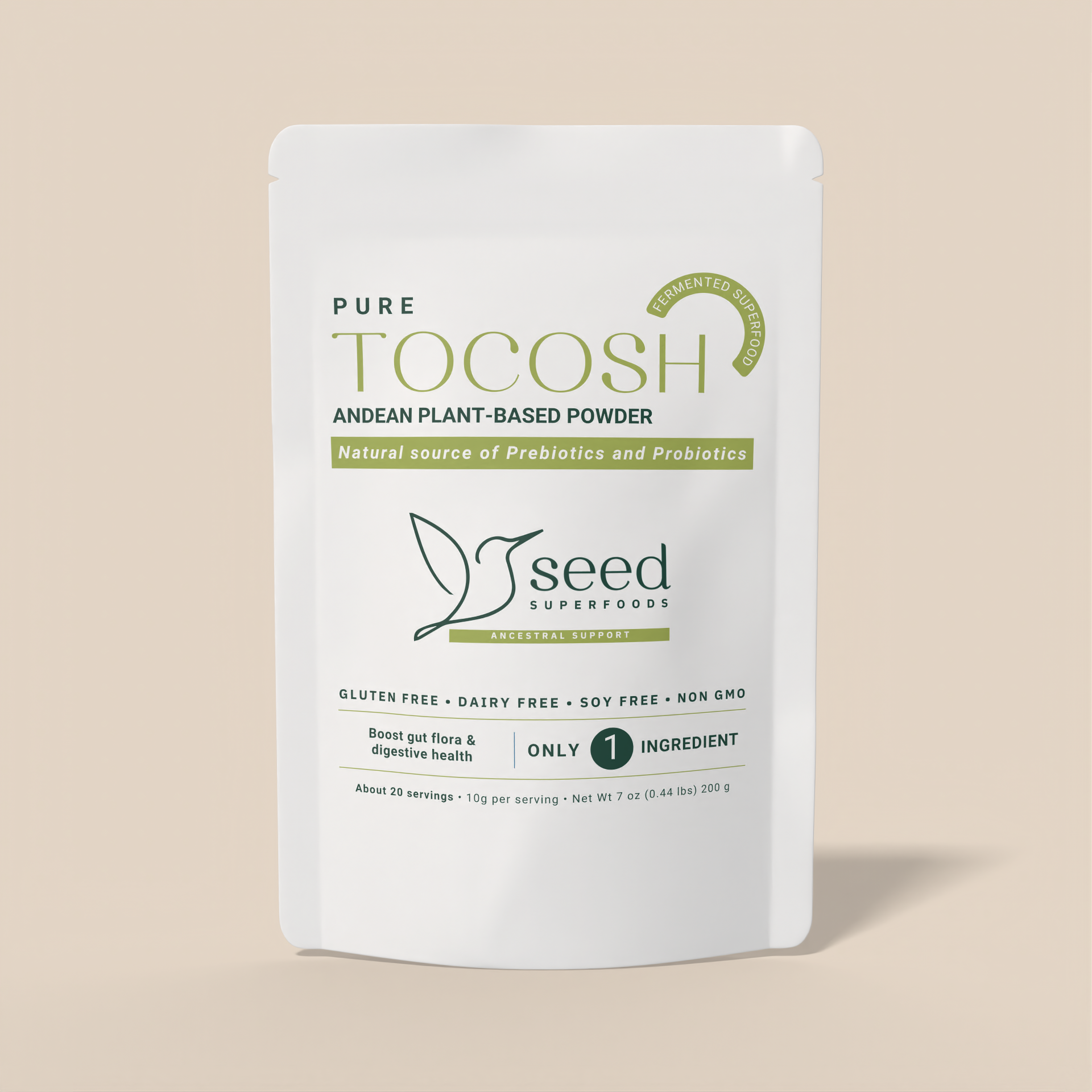
Tocosh is made by naturally fermenting potatoes in pure spring water. Our Tocosh Probiotic Superfood is priced at $28.99 and is available here: tocosh probiotic superfood.
Vegan Probiotic Foods for Sensitive Stomachs
Many people with sensitive digestion react badly to dairy, so plant-based options matter. Tocosh is dairy-free and fermented. If plant foods already cause you bloating, understanding why plant protein causes bloating can help you identify the cause before you change your diet.
Start small with any new fermented food. A teaspoon of sauerkraut juice or a few spoonfuls of kefir lets your gut adjust. For gentler picks, see our alternative options for sensitive stomachs.
Building Probiotic Meals for Gut Health Through the Day
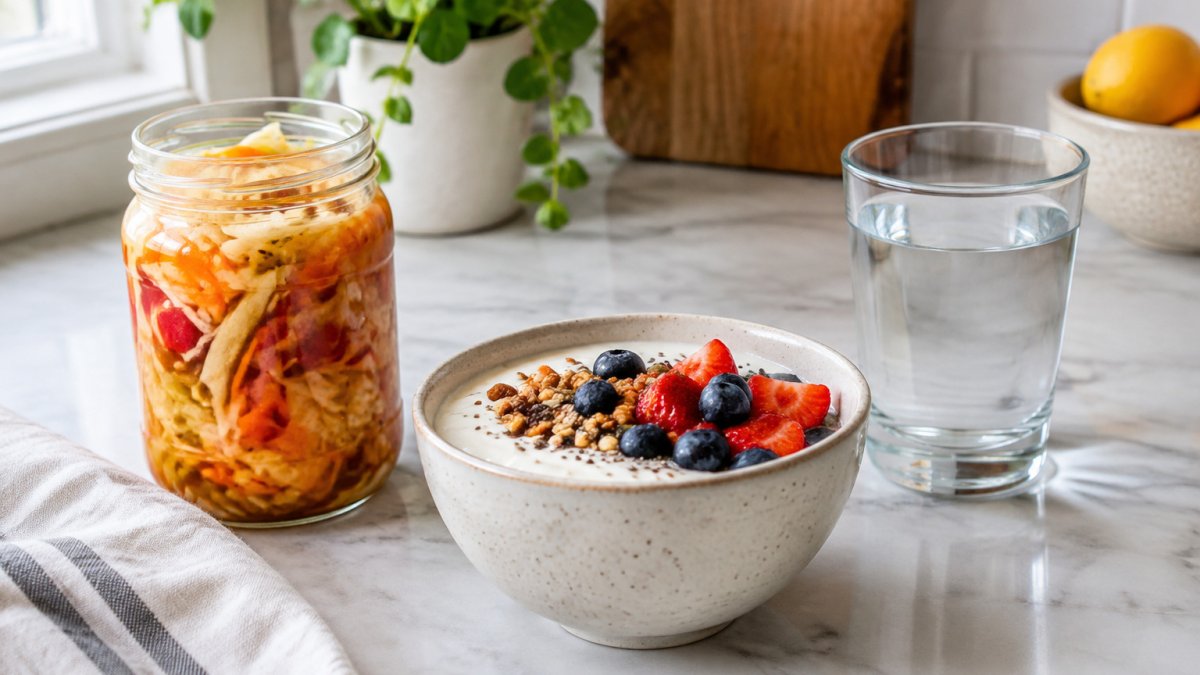
Spread fermented foods across meals instead of stacking them into one. A practical day might include kefir or yogurt at breakfast, sauerkraut alongside lunch, and a tocosh-based side at dinner. Add fiber from vegetables, legumes and whole grains to feed the bacteria you are introducing.
Consistency beats volume. A small serving daily tends to be easier to maintain than a large amount once a week.
Live Cultures, Storage, and Safe Preparation
A fermented food only delivers live microbes if the microbes are still alive when you eat it. That single fact drives most of the practical decisions below, and it is the part of the ancestral-superfood story that marketing labels tend to blur.
Reading the label for live-culture status
Look for explicit phrases such as "live and active cultures," "contains live cultures," or "unpasteurized." A label that says only "made with fermentation" or "fermented flavor" tells you nothing about live organisms. Two more checks help:
- Heat treatment. Pasteurization and other heat steps kill most bacteria and yeasts. Shelf-stable sauerkraut, kimchi, and many jarred pickles are heat-treated for safety and shelf life, so they are likely to contain few or no live cultures even though they started as ferments.
- Where it sits in the store. Refrigerated cases are a reasonable signal that a product is meant to stay cold and retain cultures; ambient shelves usually mean the opposite. This is a pattern, not a guarantee, so the label still wins.
- Ingredient list. Traditional ferments need little more than the vegetable, salt, and water (or milk and cultures, for dairy). Vinegar-based "pickled" products are preserved with acid, not fermented, and are not a live-culture source.
Storage after purchase
Keep fermented foods refrigerated once opened and follow the label's use-by guidance. Cold slows microbial activity and limits spoilage; leaving a jar on the counter accelerates both. A common pattern is that quality and live-culture counts decline over weeks in the refrigerator, so buy sizes you will finish rather than stocking up. Tocosh and similar fermented staples should be treated the same way: keep them cold, keep them sealed, and use them within the window printed on the package.
Home fermentation: what actually goes wrong
Home fermentation is a controlled competition, you want acid-producing bacteria to win before anything else does. The basics that make that happen:
- Submerge the vegetables. Keep solids fully under the brine. Exposure to air is where mold and undesirable microbes get a foothold.
- Salt with intention. Salt pulls water from the vegetables and suppresses organisms you do not want. Follow a tested recipe's salt ratio rather than eyeballing it; too little salt is a common cause of failed batches.
- Keep it cool and clean. Use clean jars and utensils, ferment in a cool spot, and keep the ferment covered. A steady, moderate temperature is easier to manage than a warm kitchen counter.
- Trust your senses at the end. A healthy ferment smells sour and tangy. Fuzzy mold on the surface, a rotten or putrid smell, or slime that is not part of the expected texture are reasons to discard the batch rather than skim and continue.
Watch out: home fermentation carries real risk when hygiene, salt, or temperature slip, and the consequences are not limited to a spoiled batch, people with weakened immune systems, pregnant people, and young children should get clinical advice before eating home-fermented foods, and anyone can choose tested commercial products as the lower-risk route.
Where the ancestral angle fits
Traditional ferments were practical preservation methods first: salt, cold, and time kept food edible through winter. The live cultures came along with the process. That history explains why ancestral foods tend to be simple, whole-ingredient ferments rather than engineered powders, and why the label and the refrigerator, not the marketing copy, are what tell you whether the cultures survived to your plate.
Start Your Gut-Friendly Routine With Tocosh
If you want a dairy-free, fermented option to start with, Seed Foods offers Tocosh for $28.99. Shop the collection and see whether a daily fermented staple fits your routine.
Frequently Asked Questions
What happens when you start eating probiotic foods every day?
Many people notice changes in digestion over a few weeks, though responses vary. A 10-week study from Stanford University found that a diet high in fermented foods increased gut microbiome diversity. Start with a small serving, such as a few tablespoons of sauerkraut or a half cup of kefir, and increase gradually. If bloating or discomfort gets worse, reduce the amount or speak with a healthcare provider before continuing.
Are fermented foods suitable for everyone?
Not necessarily. People with weakened immune systems, those who are pregnant, and people with histamine intolerance or certain digestive conditions should check with a doctor first. Live-culture foods can also trigger symptoms in some people with sensitive stomachs. Mayo Clinic notes that evidence for probiotic benefits is not conclusive for every proposed use, so these foods are best viewed as a supportive part of a varied diet rather than a guaranteed fix for any condition.
Can vegan foods provide probiotics?
Yes. Fermented plant foods such as tocosh, which is made by naturally fermenting potatoes in pure spring water, can contain beneficial bacteria. Other options include sauerkraut, kimchi, miso, tempeh, and some plant-based yogurts, though live-culture content varies by product. Check labels for terms like live and active cultures, since pasteurization after fermentation can destroy the bacteria. Tocosh is sold at $28.99 through Seed Foods.
Do probiotics actually improve gut health?
The evidence is promising but uneven. A 2024 review describes potential probiotic functions in fermented foods, including support for gut-microbiome balance and digestive health. Cleveland Clinic notes that different probiotic products may help different areas of health, so benefits do not apply uniformly across products or people. Strain-specific effects matter, and no single food is proven to work for every person or condition.

Plant Protein Powder Benefits: A Complete Guide
Benefits of Ancestral Gut Support Supplements: What Evidence Shows
Related Posts

Plant Protein Powder vs Whey: Which Fits Your Body

How to Work Ancestral Superfoods Into Your Daily Meals

Chocho Protein Amino Acid Profile: What the Numbers Show

7 Ways to Get Enough Protein on a Vegan Diet

Best Vegan Protein Powder for Smoothies in 2026

Benefits of Ancestral Gut Support Supplements: What Evidence Shows


