
Plant Protein Powder vs Whey: Which Fits Your Body
Last Updated: November 22, 2026
Quick Summary
The plant protein powder vs whey choice comes down to digestion, amino acid profile, cost, and label quality, not muscle-building superiority. A 2022 PubMed Central study found whey had no unique anabolic properties beyond plant-based proteins, so both support muscle gain when total daily protein is matched. Pick the one your body absorbs comfortably.
- Whey holds 55.2% of the protein market, while plant-based protein sales slipped 3.7% since 2022.
- Pea protein runs low on methionine and rice protein runs low on lysine, so blends cancel out the gaps.
- Chocho carries all nine essential amino acids on its own without needing a blend partner.
- Match total protein first at roughly 1.6 to 2.2 grams per kilogram of bodyweight.
- Consumer Reports found lead levels in plant-based products averaged nine times those in dairy-based products.
Table of Contents
- Plant Protein Powder vs Whey: The Quick Comparison
- Amino Acid Profiles: Complete vs Incomplete Protein
- Plant Protein vs Whey Protein for Muscle Gain
- Plant Protein vs Whey Digestion: Which Sits Easier
- Plant Protein vs Whey Protein for Weight Loss
- How to Choose a Clean Protein Powder
- Cost Per Serving: What You Pay for 25 Grams of Protein
- Find Your Clean Protein at Seed Foods
- Frequently Asked Questions
Plant Protein Powder vs Whey: The Quick Comparison
The plant protein powder vs whey debate usually starts with the wrong question. Most people ask which one builds more muscle, when the better question is which one your body can actually absorb and use without paying for it later in bloating or discomfort.
Here is the short answer. A 2022 PubMed Central study comparing plant and whey protein concluded that whey did not have unique anabolic properties beyond those of plant-based proteins.
So the choice comes down to digestion, amino acid profile, cost, and label quality. Below, we break down each factor and show you exactly how to compare a scoop of plant protein against a scoop of whey.
| Factor | Plant Protein Powder | Whey Protein |
|---|---|---|
| Protein per serving | 20-25g typical | 20-25g typical |
| Amino acid profile | Complete only in blends or specific sources | Naturally complete |
| Digestion | Varies by source and fiber content | Fast, but dairy can trigger discomfort |
| Common allergens | Soy, gluten in some formulas | Milk and lactose |
| Best for | Sensitive stomachs, dairy-free diets | Fast post-workout absorption |
Amino Acid Profiles: Complete vs Incomplete Protein
A complete protein supplies all nine essential amino acids your body cannot make on its own. Whey qualifies by default. Most single plant sources do not, which is why blends exist.
Pea protein runs low on methionine. Rice protein runs low on lysine. A well-built protein blend pairs complementary sources so the gaps cancel out.
Chocho, the Andean lupin used in our Tarwi protein, carries all nine essential amino acids on its own. That means it does not rely on a blend to patch a missing piece.
But "complete" is only the entry ticket. The more useful comparison is the actual amino acid dose you get per scoop. Two powders can both list all nine essential amino acids and still deliver very different amounts of the ones that drive muscle repair.
Leucine, BCAAs, and Muscle Protein Synthesis
Leucine is the amino acid that flips the switch on muscle protein synthesis, the process your body uses to repair and build muscle. Whey is famously leucine-rich, and that is the main argument behind its reputation.
Plant proteins can match it, but they need a higher dose of total protein to hit the same leucine threshold. A 2026 study in PubMed Central on whey versus a plant-based blend reported comparable metabolic effects between whey and a plant-protein blend supplement, though the sample size was not disclosed in the summary.
The practical takeaway: a plant protein with a full amino acid profile and a solid leucine count works. A cheap single-source plant powder with a thin profile does not.
Comparing Plant Sources and Blends at a Matched Dose
Treating "plant protein" as one category is the most common mistake in this comparison. Pea, soy, rice, and blended powders behave differently at the same protein dose.
- Pea protein is low in methionine and is a common plant source in blends.
- Soy protein is a complete protein with a strong amino acid profile, but it is a top allergen and some readers avoid it for that reason alone.
- Rice protein is low in lysine and often gritty, which is why it rarely stands alone.
- Blends combine complementary sources so the limiting amino acids cancel out. A pea-rice blend is the classic example: the rice covers pea's methionine gap and the pea covers rice's lysine gap.
- Chocho carries all nine essential amino acids on its own, so it does not depend on a blend partner to be complete.
When you compare at a matched protein dose, say 25 grams, the question becomes how much leucine and total essential amino acids that 25 grams delivers. Whey tends to pack more leucine per gram of protein.
Watch out: a label that says "complete amino acid profile" without listing amounts tells you nothing about the dose. Look for a full amino acid panel or a leucine figure per serving before you assume two products are equivalent.
For readers who want to see how a single-source complete plant protein compares, our Superfood Protein page lets you check the product details against any whey tub on the shelf.
Plant Protein vs Whey Protein for Muscle Gain
For muscle gain, both work when total daily protein is matched. That is the finding that keeps showing up in the research, and it is the one most supplement marketing ignores.
The plant protein vs whey protein for muscle gain conversation usually centers on speed. Whey absorbs faster, which makes it convenient right after training. But muscle building depends far more on hitting your daily protein target than on the 30-minute window myth.
Plant protein with a complete profile and consistent total daily intake can support muscle mass building.
- Match total protein first: roughly 1.6 to 2.2 grams per kilogram of bodyweight
- Check leucine content if you are advanced
- Prioritize a complete amino acid profile over source loyalty
- Treat recovery as a daily intake question, not a post-workout one
Plant Protein vs Whey Digestion: Which Sits Easier
Plant protein vs whey digestion comes down to what your gut tolerates. Whey contains lactose, a sugar many adults struggle to break down, which is why dairy sensitivity symptoms like bloating and cramping show up after a shake.

Plant sources vary in their ingredient lists. Some formulas include gums and thickeners, and others use soy. A shorter ingredient list is generally easier to evaluate.
For readers managing a sensitive stomach, our guide to soy free dairy free protein powder walks through what to look for. If you have already tried several powders and felt worse each time, our picks for sensitive stomachs explain which formats tend to sit easier.
Digestibility also differs by source. Pea and rice proteins are generally gentle. Chocho is a legume traditionally grown in the Peruvian Andes.
Plant Protein vs Whey Protein for Weight Loss
For weight loss, the better protein is the one that keeps you full and preserves lean mass in a calorie deficit. Both plant and whey protein do this well when protein per serving is high and added sugar is low.
Plant powders often carry fiber, which can contribute to fullness. The comparison depends on each product's label.
Watch the label, though. Flavored plant powders sometimes hide sweeteners and fillers that add calories without adding protein. A short ingredient list is your best signal. Check calories and serving size side by side, not just the protein number on the front.
How to Choose a Clean Protein Powder
Choosing a clean protein powder means reading past the front label and checking four things: the protein source, the full ingredient list, third-party testing, and the amino acid profile. Most brands make the first two easy to find and the last two hard.
Start with the source. A single-ingredient powder tells you exactly what you are getting. A blend with fifteen ingredients makes it hard to trace what is doing the work. For a deeper walkthrough, our guide to the best plant protein without gums covers the additives worth avoiding.
Reading the Label and Checking for Contaminants
Contaminants are the angle competitors gloss over. Consumer Reports' testing of plant-based protein products reported that lead levels in plant-based products averaged nine times the amount found in dairy-based products like whey. The report did not disclose its sample size or tested products, so treat the finding as a flag rather than a verdict.
Here is a checklist we would use before buying any powder:
- Protein source is named and easy to trace
- Ingredient list is short, ideally under 8 items
- No gums, fillers, or artificial sweeteners
- Third-party testing or a certificate of analysis is available
- All nine essential amino acids are listed
- Protein content per serving is at least 20 grams
- Allergen statement is clear on soy, dairy, and gluten
Cost Per Serving: What You Pay for 25 Grams of Protein
Cost per serving is where the plant protein powder vs whey math gets honest. A cheaper tub means nothing if you need two scoops to hit your protein target.
Whey is often priced lower per pound.
That is exactly why package price is the wrong number to compare. The only fair metric is cost per gram of protein, and it takes three steps to calculate:
- Divide the tub price by the number of servings in the tub to get cost per serving.
- Divide that by the grams of protein per serving to get cost per gram of protein.
- Multiply by 25 to see what 25 grams of protein actually costs you.
A worked example makes the trap obvious. Suppose a plant powder costs $40 for 20 servings at 20 grams of protein each. That is $2.00 per serving and $0.10 per gram, or $2.50 for 25 grams of protein.
Watch out: serving size and scoop size are not the same across brands.
For a full breakdown of what complete plant protein costs per gram, browse our Superfood Protein range and compare servings directly.
Find Your Clean Protein at Seed Foods
The plant protein powder vs whey decision should follow your body, not the marketing.
At Seed Foods, we build around chocho, an ancient Andean lupin that delivers complete plant protein. Our formulas are free from fillers, gums, soy, and dairy, and they are designed for sensitive stomachs.
Start with a single-ingredient option and see how it suits your routine. View our 20g of complete plant protein powered by chocho and see what a clean label actually looks like.
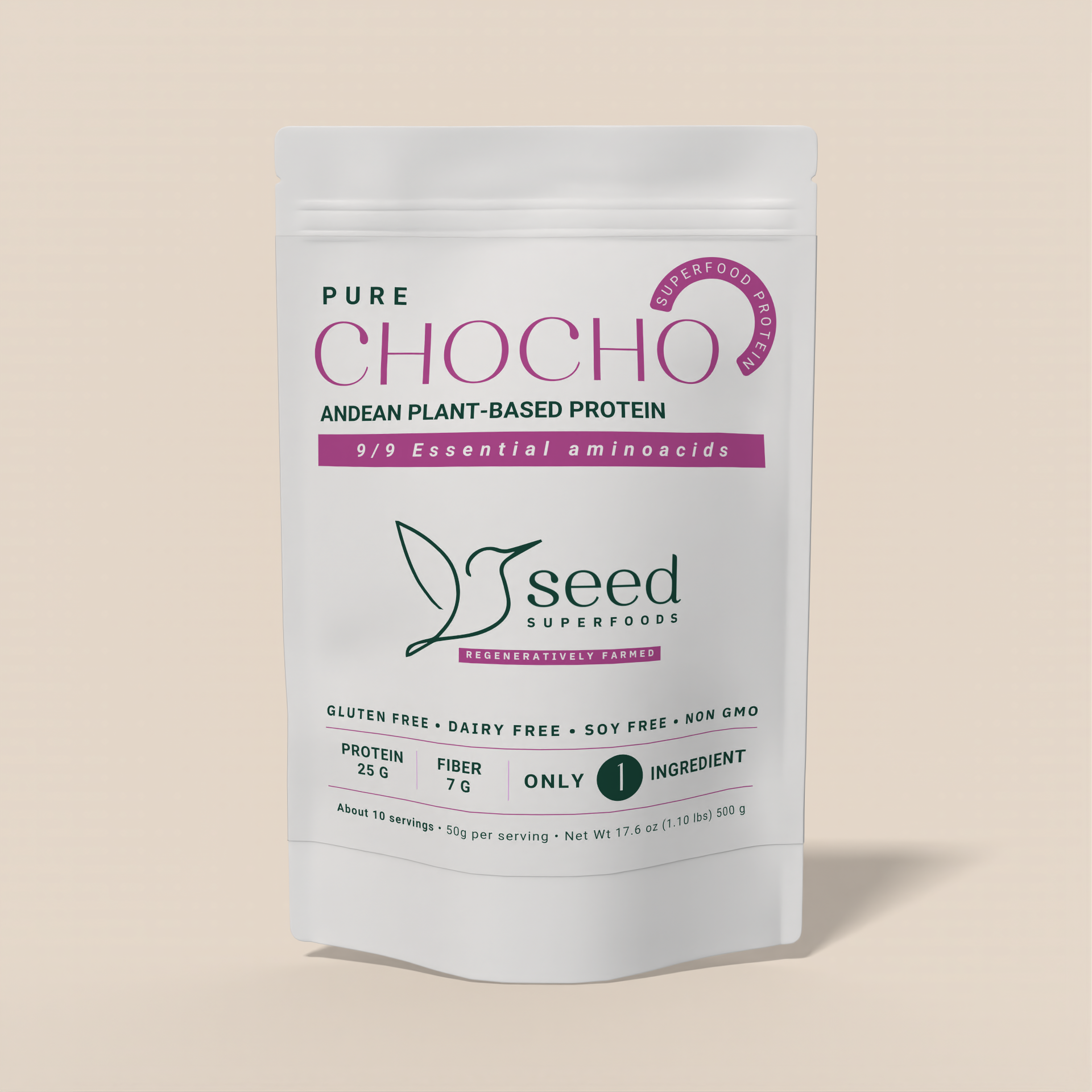
The challenge is simple: stop buying protein your stomach argues with. Seed Foods makes complete plant protein from chocho, with all nine essential amino acids, no gums or fillers, and a formula built for sensitive stomachs.
Frequently Asked Questions
What are the downsides to plant protein powder?
The main downsides are taste and texture differences, lower protein density in some single-source powders, and the need to check labels. Third-party testing is worth checking, since contaminant levels can vary between products. Some plant powders also add gums and fillers that bother sensitive stomachs. Choosing a short-ingredient, tested powder addresses most of these issues.
Which is easier to digest, plant protein or whey?
It depends on the person. Whey is a dairy protein, so anyone with lactose intolerance or dairy sensitivity may notice bloating and gas. Plant proteins skip lactose entirely, and single-ingredient options like Tarwi tend to sit lighter. A 2026 study in PubMed Central reported comparable metabolic effects between whey and a plant-protein blend, so tolerance often matters more than the source itself.
Does plant protein have all nine essential amino acids?
Not every plant protein does, but many do. Soy and Andean lupin (chocho or Tarwi) are complete proteins with all nine essential amino acids. Rice and pea are typically incomplete on their own and are blended to fill the gaps. Check the label or the product page: Seed Foods' Tarwi protein states all nine essential amino acids per serving.
Can you still build muscle with plant protein?
Yes. Research suggests that hitting your total daily protein target matters more than the protein source. A complete plant protein at 20 to 25 grams per serving fits that target.
Is plant protein or whey better for weight loss?
Neither wins outright. Weight loss depends on total calories and protein intake, not the powder type. Plant powders may carry added fiber, and products differ in calories per serving. Compare calories, added sugar, and protein per serving, then pick the one you will actually use daily.

Related Posts

How to Work Ancestral Superfoods Into Your Daily Meals

Chocho Protein Amino Acid Profile: What the Numbers Show

7 Ways to Get Enough Protein on a Vegan Diet

Best Vegan Protein Powder for Smoothies in 2026

Benefits of Ancestral Gut Support Supplements: What Evidence Shows

Are Ancestral Probiotic Superfoods Good for Gut Health?


