
9 Best Post-Workout Snacks for Muscle Recovery
Last Updated: October 24, 2026
Quick Summary
The best post-workout snacks for muscle recovery combine protein and carbohydrates in a 1:3 or 1:4 ratio, with most athletes needing 20-30 grams of protein and 60-80 grams of carbs within two hours after training. This combination repairs muscle damage, replenishes glycogen, and triggers muscle protein synthesis for faster recovery and growth.
- Aim for a 1:3 or 1:4 protein-to-carbohydrate ratio in your post-workout snack for maximum muscle protein synthesis.
- Most athletes need 20-30 grams of protein in a single post-workout snack to trigger optimal recovery.
- Eat your recovery snack within 2 hours after training, ideally within 30 minutes for best results.
- Chocho is a complete plant protein containing all nine essential amino acids, making it ideal for plant-based athletes.
- Combine simple carbs like fruit with complex carbs and protein for sustained energy and faster nutrient absorption.
Table of Contents
- Why Post-Workout Snacks Matter for Muscle Recovery
- What to Eat After a Workout for Muscle Recovery
- How Much Protein for Muscle Recovery
-
High-Protein Post-Workout Snacks to Fuel Your Recovery
- 1. Chocho Protein Bars with Almond and Cacao
- 2. Greek Yogurt with Berries and Granola
- 3. Hard-Boiled Eggs with Whole-Grain Toast
- 4. Protein Smoothies with Plant-Based Powder
- 5. Banana with Almond Butter
- 6. Cottage Cheese with Fruit and Nuts
- 7. Jerky or Meat Snacks with Apple Slices
- 8. Oatmeal with Protein Powder and Berries
- 9. Nuts and Dark Chocolate Bites
- Plant-Based Post-Workout Snacks for Athletes
- Timing Your Post-Workout Snack: Does It Really Matter?
- Choosing Your Recovery Snack Strategy
- Frequently Asked Questions
Why Post-Workout Snacks Matter for Muscle Recovery
Your muscles don't repair themselves during your workout. They repair during recovery, and the best post-workout snacks for muscle recovery provide the fuel that makes this happen.
When you train, you create microscopic tears in muscle fibers. According to research summarized by Healthline, combining protein and carbohydrates after exercise supports muscle growth, injury prevention, and faster recovery.
At Seed Foods, we've worked with athletes managing sensitive stomachs who struggle with conventional protein supplements.
Recovery timing matters, too. Your muscles respond best to nutrition within a couple of hours after training, though the exact window depends on your goals and training style.
What to Eat After a Workout for Muscle Recovery
The foundation of post-workout nutrition is straightforward: protein plus carbohydrates. This combination does two things. Protein provides amino acids to repair muscle damage. Carbohydrates trigger insulin release, which helps your muscles absorb those amino acids faster and replenish depleted glycogen stores.
The Protein and Carbohydrate Formula
Aim for a 1:3 or 1:4 ratio of protein to carbohydrates in your post-workout snack. If you're eating 20 grams of protein, pair it with 60-80 grams of carbs. This ratio maximizes muscle protein synthesis, the process where your body builds new muscle tissue.
The exact amounts depend on your body weight, training intensity, and goals. A 150-pound person doing a moderate 45-minute strength session needs roughly 20-30 grams of protein.
Carbohydrate sources matter too. Simple carbs like fruit or honey spike insulin quickly, which is useful immediately post-workout.
Functional ingredients add another layer. According to a 2024 review in PubMed Central, foods with anti-inflammatory properties like tart cherry juice, turmeric, and omega-3 fatty acids are studied for reducing exercise-related effects.
How Much Protein for Muscle Recovery
Most athletes need 0.14 to 0.23 grams of protein per pound of body weight per day, spread across meals.
If you're training twice daily or doing intense strength work, you might need the higher end. If you're doing light activity or recovery days, the lower end works fine.
Plant-based athletes sometimes worry about amino acid completeness. A complete protein contains all nine essential amino acids your body can't make on its own.
| Training Type | Protein Target | Carbs Target | Timing |
|---|---|---|---|
| Strength training | 25-35g | 75-100g | Within 2 hours |
| Endurance training | 15-25g | 100-150g | Within 30 minutes |
| Light cardio | 15-20g | 40-60g | Within 1-2 hours |
| Recovery day | 10-15g | 30-50g | Flexible |
High-Protein Post-Workout Snacks to Fuel Your Recovery
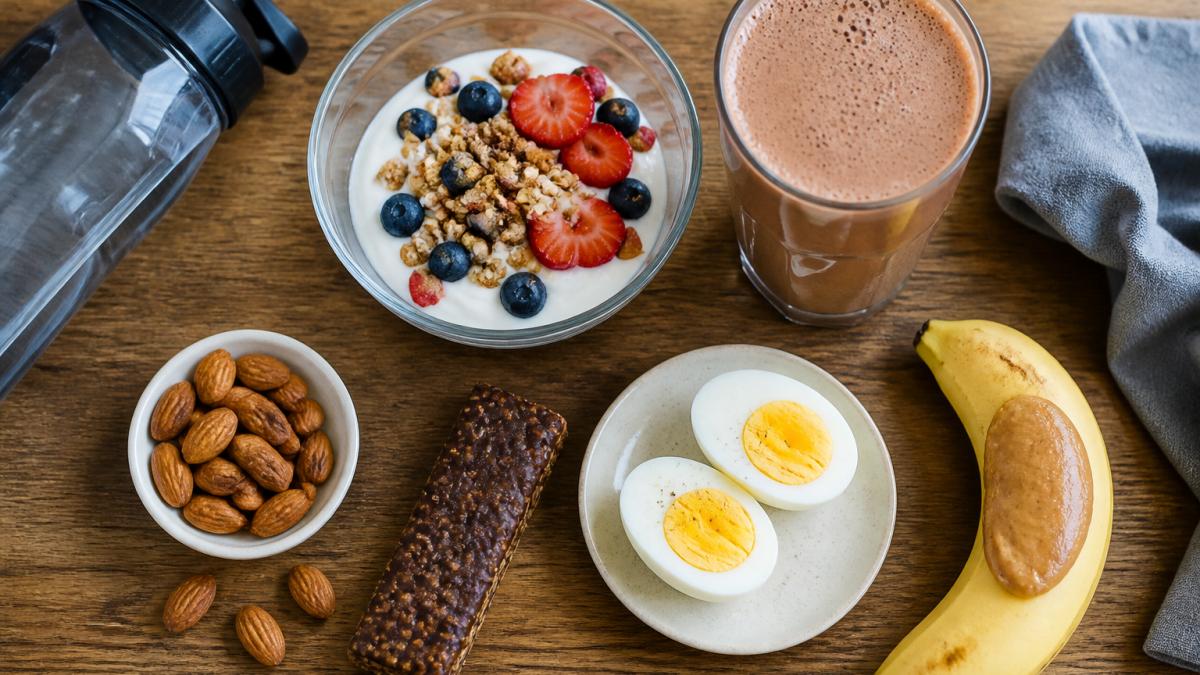
1. Chocho Protein Bars with Almond and Cacao
The ALMOND CACAO SUPERFOOD BAR | HEALTHY SNACK | PLANT-BASED | 20G PROTEIN delivers 20 grams of complete plant protein in one convenient bar.

Why this works: Chocho is naturally alkaline and anti-inflammatory. Unlike conventional protein supplements loaded with gums and fillers, this bar uses real food ingredients. The dates provide quick carbs.
Best for: Athletes with sensitive stomachs, plant-based trainees, anyone tired of bloating after protein snacks.
2. Greek Yogurt with Berries and Granola
Greek yogurt packs 15-20 grams of protein per 7-ounce serving. Add a half-cup of berries and a quarter-cup of granola, and you're looking at roughly 25 grams of protein and 40-50 grams of carbs.
This snack takes two minutes to assemble. It's affordable, widely available, and works for most people. The downside: dairy can trigger bloating or digestive discomfort in sensitive individuals. If that's you, skip this and reach for a plant-based alternative instead.
Best for: Omnivores seeking a simple, affordable recovery snack.
3. Hard-Boiled Eggs with Whole-Grain Toast
Two hard-boiled eggs deliver 12-14 grams of protein. Pair them with two slices of whole-grain toast and you've added 6-8 grams of protein and 40 grams of carbs. Add a slice of avocado or a thin spread of almond butter for healthy fats.
According to Colorado State University's workout recovery guidance, this combination represents a classic post-workout pairing: protein-rich eggs with carbohydrate-containing whole grains. The combination is easy to prep in bulk, boil a dozen eggs on Sunday and you have grab-and-go snacks all week.
Best for: Budget-conscious trainees, those with nut allergies, anyone who prefers savory recovery snacks.
4. Protein Smoothies with Plant-Based Powder
A smoothie made with one scoop of chocho protein powder (20-25 grams), one banana, one cup of unsweetened almond milk, and a handful of spinach delivers roughly 25 grams of protein and 35-40 grams of carbs.
The advantage: smoothies are fast and customizable. The disadvantage: they're liquid, so they digest quickly.
Seed Foods' Pure Tarwi Protein | 25G Plant Protein | 1.1 LBS works here because it's unflavored and blends easily without the grittiness or chalky taste many plant-based powders leave behind.
Best for: Plant-based athletes, those with dairy sensitivities, anyone short on time.
5. Banana with Almond Butter
A medium banana plus two tablespoons of almond butter delivers roughly 8-10 grams of protein and 35-40 grams of carbs. It's the simplest recovery snack on this list. The banana is pure carbs for quick glycogen replenishment.
This snack works best as a quick fix immediately post-workout, paired with a protein shake or eaten 30 minutes before a larger meal.
ALMOND CACAO SUPERFOOD BAR | HEALTHY SNACK | PLANT-BASED | 20G PROTEIN →
Best for: Runners, cardio athletes, anyone needing a quick, portable snack.
6. Cottage Cheese with Fruit and Nuts
Half a cup of cottage cheese delivers 14 grams of protein. Add a half-cup of berries (or one sliced apple) and a quarter-cup of almonds, and you've got roughly 20 grams of protein, 25 grams of carbs, and healthy fats.
The downside: dairy sensitivity. If you tolerate it well, this snack is affordable and nutrient-dense. The nuts add crunch and satiety.
Best for: Omnivores seeking a slower-digesting recovery option, those prioritizing sustained energy.
7. Jerky or Meat Snacks with Apple Slices
Two ounces of beef or turkey jerky delivers 15-18 grams of protein with minimal carbs. Pair it with one medium apple (25 grams of carbs) and you've hit the protein-carb ratio. This snack works well for carnivore-leaning athletes or those avoiding plant-based options.
Watch out: many commercial jerky brands load sodium and preservatives. Check the label and aim for products with minimal ingredients. The apple provides quick carbs and fiber.
Best for: Meat-eating athletes, those avoiding dairy or plant-based proteins, savory snack preferences.
8. Oatmeal with Protein Powder and Berries
Half a cup of dry oatmeal mixed with one scoop of protein powder and topped with berries delivers roughly 15-20 grams of protein and 40-50 grams of carbs.
This snack takes 5 minutes to prepare. It's warm, satisfying, and works year-round. Add a pinch of cinnamon or a touch of honey for flavor without excess sugar.
Best for: Cold-weather training, those seeking sustained energy, athletes who prefer warm snacks.
9. Nuts and Dark Chocolate Bites
A quarter-cup of almonds (6 grams of protein, 6 grams of carbs) paired with Seed Foods' 70% DARK CHOCOLATE COVERED ALMONDS (3.5oz) at $9.99 gives you roughly 12-15 grams of protein, 20-25 grams of carbs, and antioxidants from the cacao. The chocolate provides quick carbs. The nuts add protein and healthy fats.
This snack works best as a small post-workout boost, not as your primary recovery meal. The carbs are moderate, so pair it with fruit or a grain if you're doing intense training.
Best for: Those seeking a satisfying, portable snack, chocolate lovers, anyone wanting minimal preparation.
Plant-Based Post-Workout Snacks for Athletes
Plant-based athletes face one challenge: most plant proteins lack one or more essential amino acids. Soy is complete but causes bloating in many people. Pea protein is incomplete.
Chocho solves this. For plant-based athletes, the SUNFLOWER VANILLA PROTEIN BAR SNACK | HEALTHY SNACK | PLANT-BASED | 20G PROTEIN | NUT FREE at $5.99 is a solid choice if you have nut allergies.
For deeper guidance on plant-based protein sources tailored to your recovery goals, explore Natural Anti-Inflammatory Protein Sources to understand which plant proteins work best for your training style and digestive system.
Timing Your Post-Workout Snack: Does It Really Matter?
The "anabolic window", the supposed 30-minute window after training when your muscles absorb nutrients most efficiently, is real but narrower than most people think.
If you can't eat immediately after training, don't stress. A snack 90 minutes later beats skipping it entirely.
One exception: if you trained fasted (no breakfast before morning training), eat within 30-60 minutes. Your muscles are depleted and ready to absorb nutrients aggressively.
Choosing Your Recovery Snack Strategy
The best post-workout snack is the one you'll actually eat consistently. If you hate Greek yogurt, forcing it down won't help.
Start by identifying your constraints: Do you have nut allergies? Dairy sensitivities? Limited time? Dietary preferences? Once you know, pick one or two snacks from the list above and rotate them. Consistency beats perfection.
For athletes managing bloating, digestive discomfort, or inflammatory responses to typical protein supplements, plant-based complete proteins like chocho offer a real alternative.
Frequently Asked Questions
What is the best post-workout snack for muscle recovery?
The best post-workout snack combines protein and carbohydrates within 30-60 minutes after exercise. Research shows protein supports muscle repair while carbs replenish energy stores. Greek yogurt with berries, a protein bar with 20 grams of protein, or a banana with almond butter are effective options. For sensitive stomachs, plant-based protein sources like chocho (Andean lupin) provide complete amino acids without bloating or digestive discomfort.
How much protein should I eat after a workout for muscle recovery?
Most research recommends 20-40 grams of protein post-workout, depending on your body weight and training intensity. A general guideline is 0.25-0.4 grams per kilogram of body weight. For a 150-pound person, that's roughly 17-27 grams. Pairing protein with carbohydrates (30-60 grams) optimizes muscle repair and energy restoration. Plant-based options like chocho protein powder deliver 20-25 grams of complete protein per serving.
Are plant-based post-workout snacks effective for muscle recovery?
Yes. Plant-based snacks work well when they provide complete protein with all nine essential amino acids. Chocho (Andean lupin) is a complete plant protein containing all essential amino acids, making it as effective as animal-based options. Pair plant-based protein with whole-food carbs like oats, fruit, or whole grains. Research confirms that combining plant protein with carbohydrates supports muscle recovery and energy replenishment just as effectively as conventional options.
How soon after a workout should I eat a recovery snack?
Eating within 30-60 minutes after exercise is ideal, though the exact timing is less critical than once believed. Your body's ability to absorb nutrients and repair muscle extends beyond this window. If you can't eat immediately, a snack within 2 hours still supports recovery. For convenience, portable options like protein bars or a pre-made smoothie make it easier to refuel quickly after training.
Why do I get bloated after eating protein snacks, and how can I avoid it?
Bloating often results from difficult-to-digest proteins, artificial additives, gums, or fillers common in conventional supplements. Chocho is naturally easy to digest and free from gums and fillers, making it gentler on sensitive stomachs. Pair protein with easily digestible carbs like bananas or oatmeal, stay hydrated, and avoid high-fat foods immediately post-workout. Start with smaller portions and gradually increase to let your digestive system adjust.
The difference between adequate recovery and poor recovery often comes down to what you eat in the hours after training. Protein and carbohydrates are non-negotiable. The specific snack matters less than consistency and digestibility. If conventional recovery snacks leave you bloated or uncomfortable, try a plant-based chocho option designed for sensitive systems. Your next workout will feel the difference.

Chocho Protein Powder for Athletes: Complete Guide
7 Reasons to Choose Chocho Protein Over Other Plant Proteins
Related Posts

Chocho Beans vs Lupini Beans for Nutrition and Taste

Plant Protein Powder vs Whey: Which Fits Your Body

How to Work Ancestral Superfoods Into Your Daily Meals

Chocho Protein Amino Acid Profile: What the Numbers Show

7 Ways to Get Enough Protein on a Vegan Diet

Best Vegan Protein Powder for Smoothies in 2026

Benefits of Ancestral Gut Support Supplements: What Evidence Shows


